



- October 5, 2026
- by adventpr
- Agritech, Case Study, Posts
- 221 Views
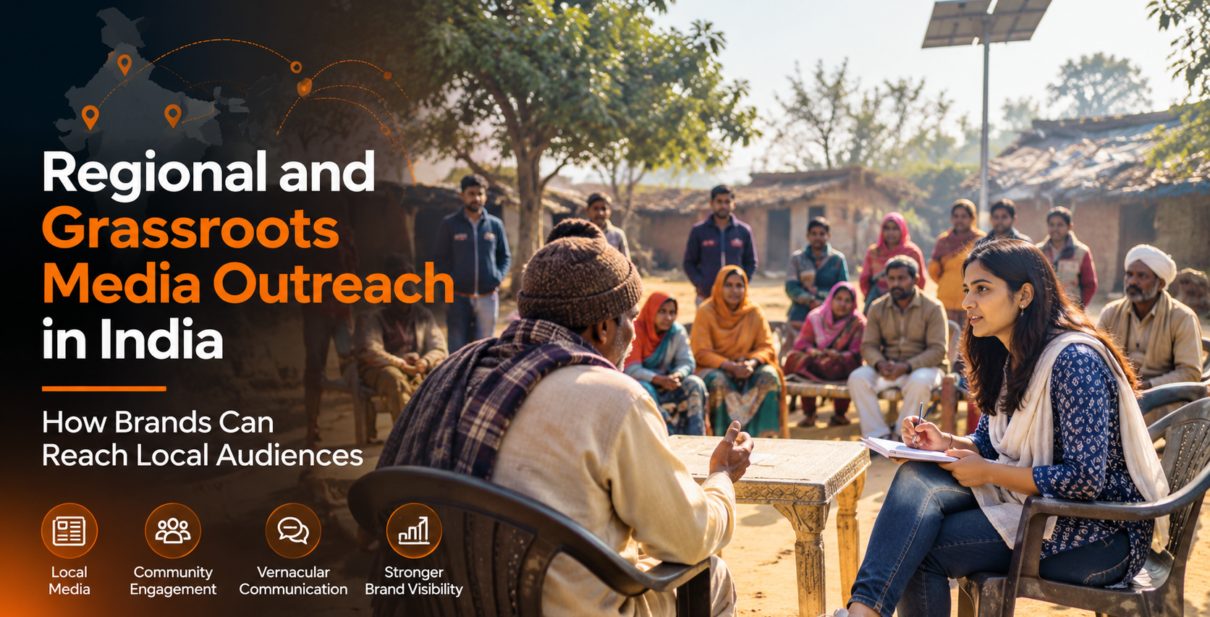
Regional media outreach helps brands communicate with audiences through relevant local publications, journalists and language specific channels. Grassroots communication extends this approach by engaging communities directly, understanding local concerns and adapting messages to the needs of each region.
For businesses operating across India, national media coverage may not always reach the audiences that matter most. A consumer brand entering a new state, an NGO running a public awareness programme or a company expanding into smaller cities may need a communication strategy that reflects local languages, media preferences and community contexts.
A regional media outreach agency in India can help businesses plan this communication by combining media research, local storytelling, regional media relations and appropriate community engagement.
The key is to make communication relevant to the people it is intended to reach, rather than simply distributing the same message across different regions.
What Is Regional Media Outreach?
Regional media outreach is the process of communicating a brand’s news, expertise and initiatives through media outlets that serve specific geographic markets and language communities.
It can include regional newspapers, television channels, digital news publications, business publications, radio and other relevant local media.
For example, a consumer brand entering Maharashtra may need Marathi media outreach alongside English business coverage. A company expanding into Tamil Nadu may need a communication approach suited to Tamil language publications and local industry audiences.
Regional media outreach typically involves journalist research, story development, publication selection, press material adaptation, media pitching and coverage monitoring.
The objective is to reach audiences through publications that are relevant to their location, interests and information needs.
What Is Grassroots Media Outreach?
Grassroots media outreach focuses on communication at the community level. It considers how people encounter information in their everyday lives and how organisations can communicate with them through trusted local channels.
Depending on the programme, grassroots communication may involve community meetings, local associations, regional creators, awareness activities, local media and direct stakeholder engagement.
Consider an organisation introducing a public health awareness programme in several districts. A national press release may announce the programme, but local communication may be needed to explain its purpose, address community questions and make the information accessible.
Grassroots communication involves listening as well as distributing messages. Feedback from communities can help organisations understand whether their communication is clear, relevant and appropriate.
Regional Media Relations vs Grassroots Communication
Regional media relations and grassroots communication have overlapping objectives, but their methods differ.
| Regional media relations | Grassroots communication |
|---|---|
| Focuses on regional journalists and publications | Focuses on local communities and stakeholders |
| Uses interviews, stories and media pitches | Uses dialogue, meetings and local communication activities |
| Prioritises editorial relevance | Prioritises community relevance and understanding |
| Measures coverage and media engagement | Measures participation, understanding and feedback |
| Often works through news organisations | May involve community organisations and local channels |
A company can use both approaches within the same programme. Regional media coverage can communicate a development to a wider audience, while grassroots activities can help address local questions and encourage meaningful participation.
The appropriate combination depends on the campaign objective and the audience.
Why Businesses Need Regional and Grassroots Media Outreach
India has significant language and cultural differences across its markets. Communication that works for an English speaking metropolitan audience may not work equally well for audiences elsewhere.
The IAMAI and Kantar Internet in India Report 2024, published in January 2025, estimated that 870 million internet users accessed Indic language content. It also reported that 57% of urban internet users preferred accessing content in Indic languages. These findings show why language preferences deserve consideration in communication planning.
Regional outreach can help businesses address several needs:
- Entering new markets: A company expanding into a new state may need communication suited to local customers, businesses and media.
- Building local awareness: Regional coverage can introduce products, services, business developments and initiatives to relevant audiences.
- Communicating in local languages: Language adaptation can make technical or unfamiliar information easier to understand.
- Engaging stakeholders: NGOs, infrastructure companies and public awareness programmes may need to communicate directly with communities affected by their activities.
- Managing reputation: A regional concern can require a response that considers the affected location, language and local context.
- Regional outreach should begin with a defined audience and business objective. Geographic coverage alone is not a meaningful measure of communication success.
How Regional and Vernacular Media Outreach Works
An effective regional programme requires more than translating a national press release. It needs research, editorial judgement and an understanding of local context.
Regional media research
Identify publications, journalists and digital news platforms that cover the relevant industry and geography. Review their recent coverage and establish whether the proposed story fits their editorial interests.
Language adaptation
Prepare communication in languages relevant to the intended audience. Adapt examples, terminology and supporting information while preserving factual accuracy. Translation should be reviewed by people who understand both the language and the subject.
Local story development
Identify the aspect of a story that matters to the region. A business expansion may be relevant because of local employment, distribution or industry development, provided those details are verified.
Journalist outreach
Approach relevant journalists with a concise explanation of the story, supporting evidence and access to appropriate company experts. Avoid mass distribution of identical pitches to unrelated publications.
Coverage monitoring
Record published coverage, publication details, links where available and the relevant geographic market. Separate confirmed editorial coverage from paid placements and press release syndication.
This approach helps businesses connect media outreach with actual communication objectives.
Which Businesses Can Benefit From Regional Media Outreach?
Regional media outreach can support different industries, although each needs a distinct strategy.
- Consumer brands: Product launches, retail expansion, new distribution and regional campaigns may offer local news angles.
- Healthcare organisations: Health education, service launches and public awareness initiatives can require communication in the languages understood by intended communities.
- Education companies: New centres, educational initiatives, institutional developments and relevant research can create opportunities for regional coverage.
- Technology companies: Regional expansion, technology adoption and industry developments can provide stories for local business and technology media.
- Agriculture businesses: Farmer education, agricultural innovation and product information may require communication suited to local languages and farming contexts.
- Infrastructure and logistics companies: Project developments, operational milestones and stakeholder communication may require different approaches for local communities and business media.
- NGOs and social development organisations: Community programmes, field initiatives and independently verified outcomes can provide material for regional storytelling and public awareness.
The most useful strategy is one based on the organisation’s actual activities and the interests of the intended audience.
How to Plan a Regional Media Outreach Programme
A well planned regional programme should follow a clear process.
1. Define the objective. Decide whether the programme aims to build awareness, communicate a launch, support market entry, inform communities or strengthen reputation.
2. Map the audience. Identify the states, cities, districts, language groups and stakeholders that matter to the programme.
3. Select relevant media. Research suitable regional newspapers, digital publications, broadcast outlets and community channels.
4. Develop local stories. Identify genuine news angles supported by evidence, local relevance and appropriate expert input.
5. Adapt communication. Prepare accurate press materials and supporting information in the required languages.
6. Coordinate outreach. Establish responsibilities, spokesperson availability, approvals and publication priorities.
7. Measure the outcome. Track media coverage, audience relevance, engagement and stakeholder feedback against the original objectives.
For grassroots programmes, add a feedback mechanism so the organisation can understand whether people received and understood the communication.
How Regional Media Outreach Builds Brand Visibility
Regional media outreach can give businesses additional ways to communicate with customers, partners, employees and local stakeholders.
Relevant coverage may bring referral traffic, improve awareness of a company’s activities and create opportunities for further discussion. Vernacular content can also make information accessible to people who prefer consuming it in their own language.
From an SEO and Digital PR perspective, legitimate regional media mentions can contribute to a company’s wider online presence. Their value depends on the relevance and credibility of the publication, the quality of the story and the audience reached.
A regional mention does not guarantee improved Google rankings or AI search citations. Its immediate value should be judged by the actual coverage and its relevance to the organisation’s communication objectives.
For brands with a wider digital strategy, regional coverage can complement website content, expert profiles, search optimisation and reputation monitoring.
How to Choose a Regional Media Outreach Agency in India
Businesses evaluating a regional media outreach agency in India should assess its actual capabilities rather than rely on claims of nationwide reach.
Consider whether the agency can:
- Research publications and journalists by region and industry.
- Plan media outreach according to specific communication objectives.
- Adapt press materials accurately for relevant languages.
- Understand the difference between earned coverage and paid publication.
- Coordinate local stakeholder communication when required.
- Provide verifiable coverage reports.
- Identify reputational risks and prepare appropriate responses.
- Explain its geographical capabilities and any requirements for local partners.
Ask for relevant examples of previous work where clients have authorised disclosure. Agree on the scope of regional markets, language support, reporting and responsibilities before starting a campaign.
An agency should also be transparent about limitations. A promise to secure coverage in every region is not a substitute for a realistic media strategy.
How AdventPR Approaches Regional and Grassroots Media Outreach
AdventPR‘s published service information includes national and regional media relations, reputation management, crisis management, Digital PR and communication for NGOs and social development organisations. Its website also describes media outreach as part of its approach to building brand visibility.
These services provide a basis for planning regional communication around business developments, expert commentary, public awareness and relevant stakeholder needs.
For a regional programme, the specific requirements should be established at the outset. These may include the target states, priority publications, required languages, community communication needs and reporting framework.
Any requirement for local field execution, specialist language support or community mobilisation should be agreed as part of the engagement rather than assumed.
The focus should remain on accurate storytelling, relevant media selection and measurable communication outcomes.
Frequently Asked Questions
A regional media outreach agency helps businesses communicate with audiences through relevant local publications and journalists. Its work can include regional media research, story development, journalist outreach, language adaptation and coverage reporting.
Regional media outreach focuses on local news outlets and journalists. Grassroots communication focuses on direct community engagement, listening and stakeholder participation. Both can be used together in a coordinated communication programme.
Vernacular media outreach allows businesses to communicate in languages preferred by their target audiences. It can make information more accessible and help companies adapt their messages to regional contexts.
Businesses can measure relevant media mentions, publication quality, geographic coverage, referral traffic and stakeholder engagement. Grassroots programmes can additionally track participation, feedback and audience understanding.