



- November 17, 2026
- by adventpr
- Branding, Industry insights
- 78 Views
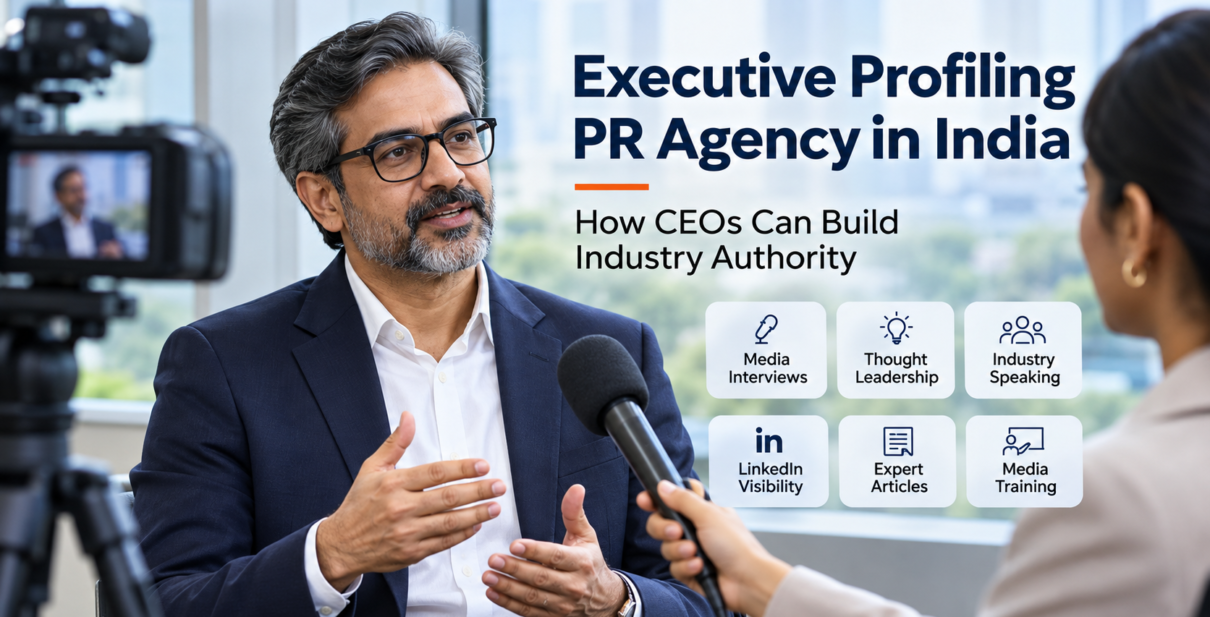
Executive Profiling PR Agency in India
A company’s reputation is influenced by the people who lead it.
For founders, CEOs, and senior executives, professional visibility can affect how customers, investors, business partners, employees, and industry stakeholders perceive an organization.
Yet many business leaders have limited visibility outside their own company networks. Their industry knowledge may be strong, their business may be growing, and their experience may be relevant to market discussions. However, they rarely contribute to the conversations taking place in business publications, industry forums, and professional platforms.
This is where executive profiling and thought leadership public relations become relevant.
A structured executive profiling program helps business leaders communicate their expertise through media interviews, expert commentary, opinion articles, industry events, and professional digital platforms.
For companies operating in competitive Indian markets, this can support brand credibility, business development, and corporate reputation.
What Is Executive Profiling in Public Relations?
Executive profiling is a strategic communication process used to establish the professional identity and industry visibility of a company’s senior leaders.
It focuses on communicating what an executive knows, what they stand for and which industry conversations they can contribute to.
A typical executive profiling programme may include:
- Business media interviews.
- Expert commentary and media quotes.
- Founder and CEO profile articles.
- Industry opinion articles and bylined contributions.
- Conference and panel opportunities.
- LinkedIn thought leadership.
- Podcast and business discussion appearances.
- Executive media training.
- Corporate reputation and leadership communication.
The objective is to establish a credible, consistent public profile based on the executive’s actual experience.
Executive profiling is different from simply publishing a founder’s photograph or company announcement. It requires a clear subject of expertise, supporting evidence, relevant communication and sustained participation.
Why Indian CEOs and Founders Need a Thought Leadership Strategy
Indian businesses operate across competitive sectors such as technology, financial services, healthcare, manufacturing, infrastructure, consulting and e-commerce.
In these sectors, prospective customers and partners often evaluate the people behind a company before entering a business relationship.
A founder who regularly shares useful industry perspectives can give prospective customers more information about the company’s thinking and expertise.
There are several business reasons to invest in executive visibility.
1. Build Credibility Beyond Company Advertising
Advertising communicates what a company wants customers to know.
Thought leadership gives executives an opportunity to explain how they understand industry challenges, market developments and business decisions.
For example, a technology CEO could contribute commentary on enterprise AI adoption, data security or digital transformation.
A financial services executive could explain market infrastructure, financial inclusion or regulatory developments within their professional expertise.
The subject should be relevant to the executive’s actual knowledge and experience.
2. Improve Business and Partnership Conversations
Executive visibility can support the early stages of B2B relationship building.
A prospective client researching a technology provider, consulting company or financial services business may come across its founder’s interviews, expert articles or industry commentary.
This content can provide additional context about the leadership team’s experience and approach.
PR should therefore support the sales process by giving business development teams credible communication assets to share with relevant prospects.
3. Strengthen Investor and Stakeholder Communication
Founders and senior executives often need to communicate with investors, lenders, industry partners and other stakeholders.
Consistent executive communication can help explain a company’s business direction, industry understanding and corporate priorities.
For companies approaching fundraising or preparing for greater public-market scrutiny, communications require additional care. Financial claims, forecasts and material developments should be reviewed with relevant legal and financial advisers before publication.
4. Create a Recognisable Industry Point of View
Successful thought leadership requires a subject that the executive can consistently contribute to.
A founder should not comment on every trending topic simply to increase social media activity.
For example:
- A SaaS founder may focus on enterprise technology and business automation.
- A healthcare CEO may discuss healthcare infrastructure and patient access.
- A manufacturing leader may share perspectives on industrial productivity and supply-chain development.
- A fintech executive may contribute insights on financial technology and digital payments.
- A human resources leader may discuss talent management and workforce transformation.
A focused subject makes an executive’s professional identity easier to understand.
5. Support Digital Discoverability
Executive interviews, published articles, company profiles and relevant professional content can create additional opportunities for people to discover a business and its leaders online.
Consistent use of the executive’s correct name, designation, company affiliation and areas of expertise can help establish a clearer digital identity.
Digital PR can extend this visibility through relevant online publications and credible third-party references.
However, media coverage does not guarantee Google rankings or inclusion in AI-generated answers.
7 Activities Included in an Executive Profiling PR Programme
A professional executive profiling agency should develop a coordinated programme instead of treating every interview or social media post as an independent activity.
1. Executive Positioning and Personal Brand Strategy
Start by understanding the executive’s professional background, industry experience, achievements and business objectives.
The PR team should establish:
- Primary areas of expertise.
- Professional positioning statement.
- Key industry subjects.
- Target media publications.
- Relevant stakeholder groups.
- Preferred communication platforms.
- Reputation sensitivities.
The outcome should be a clear positioning document that guides future media and content activities.
2. Business Media Interviews
Media interviews allow executives to explain their views on relevant business developments.
The PR agency should identify journalists and publications that cover the executive’s sector and prepare appropriate story angles.
Potential interview formats include business news features, sector-specific interviews, expert conversations and leadership profiles.
Media interest and editorial approval determine whether an interview is published. An agency should not promise guaranteed coverage.
3. Bylined Articles and Expert Commentary
An executive’s experience can be converted into original industry articles and expert opinions.
Possible subjects include:
- How Indian businesses are adopting artificial intelligence.
- Challenges facing India’s manufacturing sector.
- The future of digital financial services.
- Leadership challenges during business expansion.
- Changes in enterprise technology adoption.
- The role of technology in business productivity.
Strong contributions should contain useful analysis and original perspectives rather than promotional company descriptions.
4. LinkedIn Executive Branding
LinkedIn can support an executive’s public positioning between media opportunities.
An executive content programme may include:
- Industry observations.
- Leadership perspectives.
- Business lessons.
- Commentary on relevant reports.
- Company milestones.
- Professional achievements.
- Participation in industry discussions.
The content should reflect the executive’s own voice and be approved before publication.
5. Conference and Speaking Opportunities
Industry conferences, professional associations, business forums and expert panels can provide another route to executive visibility.
The agency should identify suitable opportunities based on the leader’s expertise and the relevance of the audience.
The goal is to secure meaningful participation rather than collect event appearances without a clear business purpose.
6. Podcast and Digital Media Visibility
Business podcasts, industry discussions and specialist digital publications can give executives additional platforms to explain complex subjects.
These channels are particularly relevant for technology, financial services, entrepreneurship, healthcare and other knowledge-intensive industries.
7. Media Training and Interview Preparation
Executives should be prepared to explain business developments clearly and respond to difficult questions.
Media training can cover:
- Core messages.
- Interview preparation.
- Question handling.
- Evidence-based statements.
- Communication during sensitive situations.
- On-camera presentation.
- Consistency across spokespersons.
This preparation is particularly useful when executives deal with journalists, investors or public stakeholders.
How to Choose the Right Executive Profiling PR Agency in India
The agency you select should understand your industry, the executive’s professional experience and the business objectives behind the visibility programme.
Before appointing an agency, evaluate these factors.
Industry Understanding
Does the agency understand your business model and sector-specific communication requirements?
An executive representing a fintech business has different communication requirements from a manufacturing CEO or healthcare professional.
Media Relations Capabilities
Ask which publications and journalists are relevant to your industry.
Evaluate the agency’s approach to editorial pitching, interviews, expert commentary and media relationships.
Quality of Content
Review whether the agency develops original viewpoints, useful industry insights and well-researched articles.
A high volume of generic posts does not establish thought leadership.
Experience in Executive Positioning
Ask for examples of relevant executive profiling assignments, published contributions and leadership visibility programmes.
Check whether the agency can explain its actual role in those outcomes.
Reporting and Accountability
A professional engagement should include a clear reporting framework.
Ask how the agency will measure progress beyond the number of articles published.
Relevant indicators include media relevance, executive visibility, message accuracy, speaking opportunities, referral traffic and qualified business enquiries.
Clear Scope of Services
Understand whether the proposed engagement includes:
- Executive positioning.
- Media relations.
- Byline development.
- LinkedIn content.
- Speaking opportunities.
- Media training.
- Digital PR.
- Performance reporting.
The proposal should clearly identify deliverables, responsibilities, approval processes and commercial terms.
How Much Does Executive Profiling PR Cost in India?
Executive profiling pricing depends on the number of executives, scope of media outreach, content requirements, target publications and duration of the engagement.
A focused founder positioning programme may require a different level of investment from a multi-executive corporate communications programme.
Before comparing agency proposals, clarify:
- Number of executives included.
- Target media categories.
- Expected content production.
- Media outreach and interview support.
- LinkedIn management requirements.
- Speaking opportunity development.
- Media training.
- Reporting frequency.
Avoid selecting an agency based exclusively on the promised number of media placements.
The relevance and credibility of those opportunities should be considered alongside the overall cost.
How to Measure the Success of an Executive Profiling Campaign
Executive profiling should be measured through visibility, reputation and business relevance.
Media visibility
- Relevant media interviews.
- Published expert commentary.
- Bylined articles.
- Industry publication coverage.
- Speaking and panel invitations.
Digital visibility
- Executive name searches.
- Relevant website referral traffic.
- LinkedIn engagement from relevant audiences.
- Quality brand and executive mentions.
- Relevant digital publication references.
Business outcomes
- Qualified enquiries influenced by executive visibility.
- Partnership conversations.
- Meetings with potential customers.
- Investor or stakeholder engagement where applicable.
- Sales opportunities supported by executive content.
Track these outcomes using website analytics, campaign tracking and CRM records. Do not assume that every opportunity originated from a media placement.
Why Consider AdventPR for Executive Profiling and Thought Leadership?
AdventPR helps businesses communicate their industry expertise, leadership perspectives and corporate developments through strategic public relations and digital communication.
Its technology PR offering includes executive profiling, thought leadership, media relations, digital PR, reputation management, content development and strategic brand positioning.
For companies preparing for important corporate or capital-market milestones, executive communication can also form part of a broader reputation and investor relations strategy.
A suitable executive visibility programme should begin with the leader’s actual expertise and the company’s objectives.
AdventPR’s approach can be aligned around the following priorities:
- Identifying the executive’s professional positioning.
- Developing relevant industry story angles.
- Preparing media commentary and expert articles.
- Identifying suitable media opportunities.
- Supporting executive digital visibility.
- Measuring visibility and business-relevant outcomes.
The objective is to build a consistent and credible leadership profile over time.
Looking for an Executive Profiling PR Agency in India?
Are you a founder, CEO or senior business leader looking to establish a stronger presence in business media and your industry?
AdventPR can discuss your executive visibility requirements and help identify suitable PR and thought leadership opportunities.
Start with an Executive Visibility and Media Positioning Review to assess your current profile, positioning gaps and communication priorities.
Advent Public Relations
Website: https://adventpr.com/
Email: info@adventpr.com
Phone: +91 93199 71631
Explore AdventPR’s Technology PR Services or Investor Relations PR.
Frequently Asked Questions
An executive profiling PR agency helps CEOs, founders and senior professionals develop industry visibility through media interviews, expert commentary, thought leadership articles, speaking opportunities and digital communication.
A CEO can build professional visibility by establishing clear areas of expertise, contributing original industry insights, participating in relevant media discussions and maintaining consistent professional communication on platforms such as LinkedIn.
Executive positioning is generally a sustained communications programme. Early activities may include positioning development and content preparation, while media visibility and recognition depend on editorial relevance, executive participation and available opportunities.
It can support business development by making executive expertise more visible to potential customers and partners. Actual enquiries depend on the audience, content quality, media relevance, website conversion experience and sales follow-up.
Executive profiling focuses on establishing a leader’s professional identity and public visibility. Thought leadership focuses on the ideas, expertise and perspectives that make that leader worth listening to. The two activities work together.
A CEO’s communication should support the company’s broader reputation strategy while retaining a distinct professional voice. Different executives may need different communication themes based on their expertise.
Credible and consistent third-party references can help establish an executive’s digital identity and subject association. However, no agency can guarantee that a person will appear in AI search recommendations or citations.