



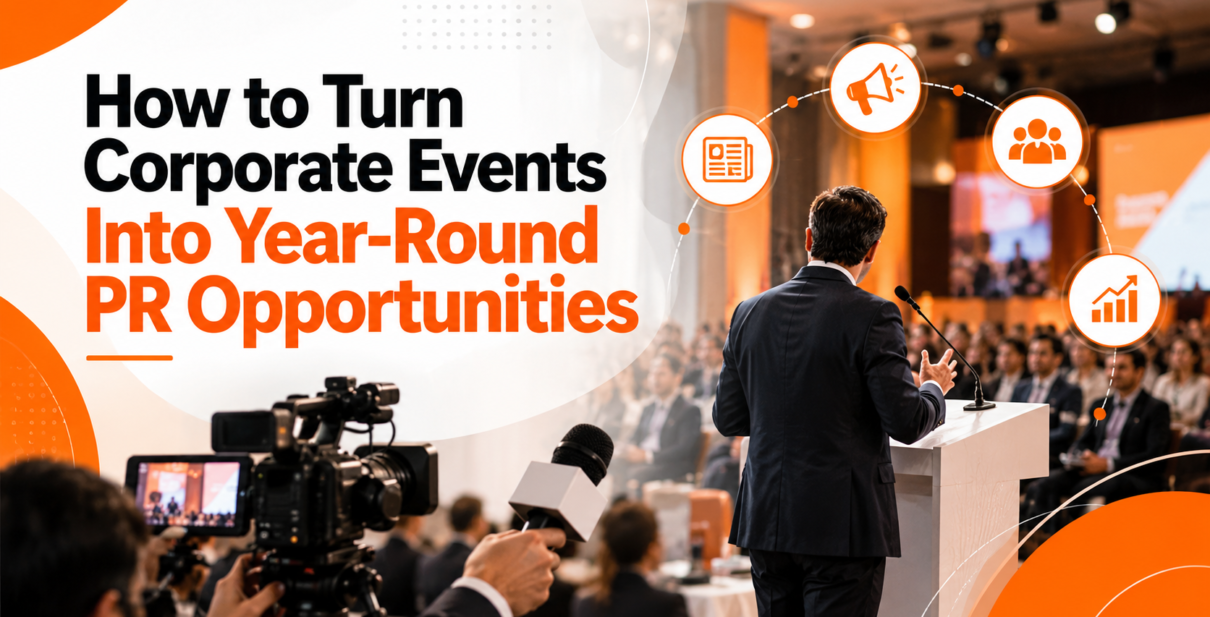
Even if a corporate event lasts only a single day, the stories surrounding it can continue to capture people’s attention long after the venue has closed its doors. Events such as product launches, business conferences, industry exhibitions, leadership meetings, and corporate celebrations provide companies with an opportunity to showcase their expertise, share significant developments, and connect with their target audience.
However, organizing an event does not automatically guarantee media coverage. Companies need a clear communication strategy that gives journalists and the audience a reason to pay attention.
Corporate event PR connects event planning with media relations, brand storytelling and ongoing communication to make an event more meaningful for the business.
Why Corporate Events Need a PR Strategy
Many companies focus heavily on the event itself. They invest in the venue, speakers, production, invitations and guest experience. These elements matter, but the communication strategy also needs attention.
A well-planned PR approach can help companies:
- Communicate important business developments.
- Build relationships with relevant journalists.
- Position founders and senior executives as industry experts.
- Share new products, research and business announcements.
- Extend event visibility through digital media and content.
The objective is to create a communication plan around the event rather than depend entirely on photographs and social media updates after it finishes.
1. Identify the News Value Before the Event
The first step is to understand why the event deserves public attention. A company conference may be important internally, but a journalist needs a relevant story for their readers. Consider what makes the event different.
Is the company announcing a new product? Is an industry report being released? Are senior business leaders discussing an important development? Is the organisation sharing original research or announcing a significant partnership?
These details can provide stronger media angles than a general announcement that an event is taking place. A useful PR exercise is to write one sentence explaining why someone outside the organisation should care about the event. If the reason is unclear, the story needs further development.
2. Develop a Media Communication Plan
Media outreach should begin before the event. Identify publications, journalists and media categories that are relevant to the announcement, industry and intended audience.
For example:
Business media: Suitable for business strategy, expansion, leadership announcements and corporate developments.
Industry publications: Relevant for technical developments, sector-specific research and industry discussions.
Technology media: Useful for innovation, product developments and technology demonstrations.
Regional publications: Relevant for local business announcements, regional expansion and community initiatives.
The same event may offer several story angles, but every pitch should match the publication’s editorial interests.
Avoid distributing identical messages to unrelated media outlets.
3. Prepare Spokespersons and Leadership
Corporate events frequently bring founders, CEOs, directors and subject-matter experts into contact with journalists.
These interactions can create opportunities for interviews and expert commentary.
Prepare each spokesperson with:
- Three or four clear communication messages.
- Verified company information and relevant figures.
- Background on the event and its purpose.
- Likely media questions.
- Guidelines for sensitive or confidential topics.
Spokespersons should explain developments in simple language and support their statements with accurate information.
The objective is to make the organisation’s expertise accessible to the audience.
4. Create Media-Ready Content and Assets
A PR campaign becomes easier to execute when essential information is available before the event.
Prepare a media kit containing relevant materials, such as:
- A concise company profile.
- Event background and programme.
- Speaker biographies and photographs.
- Official announcements.
- Approved quotations.
- Relevant research or supporting data.
- Media contact information.
For visual coverage, arrange professional photography and video footage.
Make sure names, designations, captions and factual details are accurate. Obtain the necessary permissions before sharing photographs or recorded statements.
5. Manage Media Relations During the Event
An event provides a useful setting for direct interaction between journalists, company representatives and industry experts.
However, media engagement needs coordination.
Assign a communications representative to manage journalist queries, interview schedules and follow-up requests.
Make sure spokespeople are available at agreed times. Provide approved background information and help journalists connect with the right company representatives.
A planned interview opportunity can be more useful than expecting journalists to independently find someone to speak with.
6. Extend Event Coverage After the Event
The communication process should not stop when the programme ends.
Post-event activities can provide additional opportunities for visibility.
Consider publishing:
Event highlights: Summarise the key discussions, announcements and important developments.
Leadership insights: Turn a speaker’s presentation into an expert article or interview.
Research-led content: Share relevant findings or industry observations introduced during the event.
Media follow-ups: Respond to outstanding journalist queries and provide supporting material.
Social content: Share approved photographs, short video clips and speaker highlights.
Website updates: Publish an event recap that explains the company’s involvement and links to relevant resources.
Only share material that is approved for public distribution. Some discussions or announcements may have confidentiality or embargo restrictions.
7. Measure the Results of the PR Campaign
Event success should not be measured only through attendance.
The PR team should also review the quality of media engagement and the value of the communication outcomes.
Useful measures include:
- Relevant media mentions.
- Published interviews and expert commentary.
- Accuracy of key messages in coverage.
- Referral traffic from published coverage.
- Engagement with event-related digital content.
- Qualified business enquiries generated through the campaign.
- New media relationships established.
The metrics should reflect the original objectives. A leadership event, product launch and industry conference may require different measures.
Avoid treating every media mention as equally valuable.
8. Build a Year-Round Communication Calendar
One event can provide material for future communication activities, provided the information has ongoing relevance.
For example, a business conference may lead to a series of expert articles, leadership interviews, industry commentary and discussions about the issues raised during the programme.
A product launch may provide further opportunities to communicate customer use cases, product developments and company milestones.
This does not mean repeatedly publishing the same announcement. Each follow-up should provide new information or a different, useful perspective.
A communication calendar helps businesses organise these opportunities and maintain a consistent brand presence between major events.
How AdventPR Supports Corporate Event Communication
Corporate events can become part of a wider public relations programme when the event narrative, spokesperson strategy, media outreach and follow-up content are planned together.
AdventPR provides public relations and media communication services, including media relations, reputation management, content marketing and trade event and awards communication.
The agency’s approach focuses on identifying relevant stories, connecting them with appropriate media opportunities and extending brand communication across relevant channels.
Explore AdventPR’s PR services to understand how strategic communication can support your next corporate event.