



- September 14, 2026
- by adventpr
- Uncategorized
- 299 Views
India China Relations
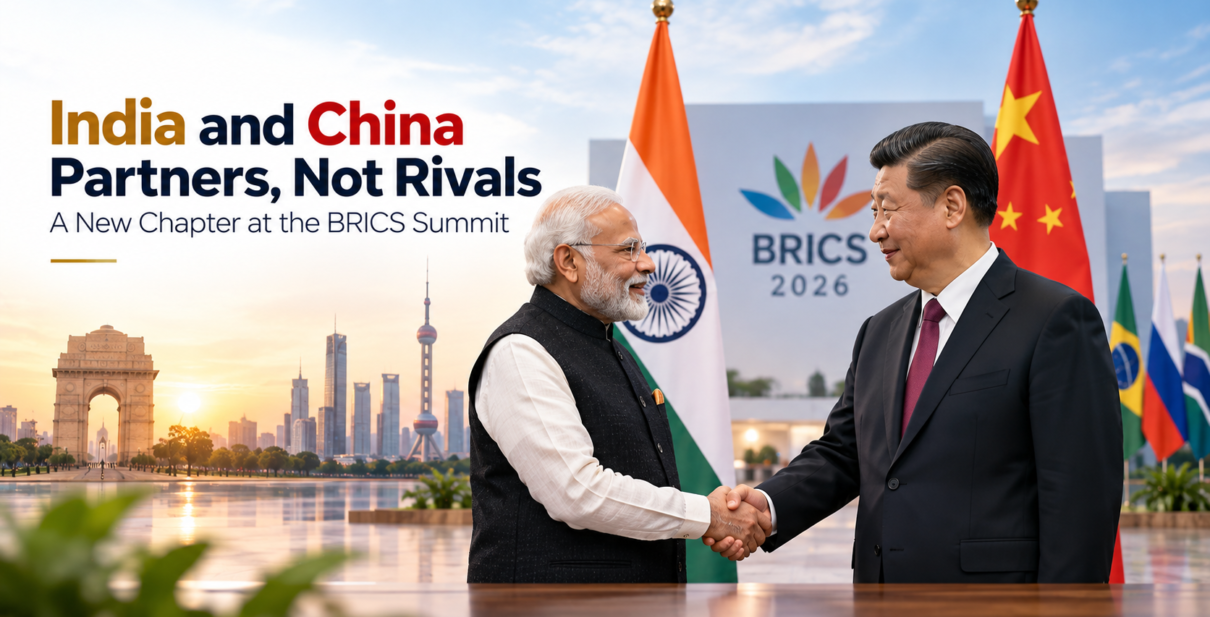
The latest meeting between Indian Prime Minister Narendra Modi and Chinese President Xi Jinping at the 2026 BRICS Summit in New Delhi has placed India-China relations back at the center of business and geopolitical discussion.
During the meeting, Xi described India and China as partners rather than rivals, while both sides stressed the importance of taking a strategic and long-term view of bilateral relations. Modi, however, also reiterated that peace and stability along the border remain an essential basis for further development of ties.
The message is significant, but businesses should read it with balance.
This is not simply a story about diplomacy. It is also about trade, supply chains, market access, technology, investment, mobility and corporate reputation.
For companies operating across India, China and the wider Asian market, the changing tone in bilateral relations makes strategic communication increasingly important.
What Happened at the BRICS Summit?
Prime Minister Narendra Modi and President Xi Jinping met on the sidelines of the 18th BRICS Summit in New Delhi, marking Xi’s first visit to India in seven years. The two leaders discussed the future of bilateral relations, border stability, economic ties, business links, and greater people-to-people engagement.
According to India’s official statement, both leaders agreed that differences should not become disputes. They also supported greater cultural exchanges, business linkages, and mobility between the two countries, while acknowledging the need to address structural trade imbalances, supply chain concerns, and predictable market access.
Xi also pushed for stronger economic cooperation within an expanded BRICS framework, including initiatives around artificial intelligence, services trade, supply chains, and investment. China will take the BRICS chair in 2027.
This creates a wider commercial context for the India-China relationship.
India and China: Partners, Competitors, or Both?
The phrase “partners rather than rivals” should not be interpreted as the disappearance of competition.
There are still unresolved strategic issues between the two countries. Border negotiations remain incomplete, military deployments continue, and significant differences remain over trade, technology, and strategic alignment. India has also maintained that peace and tranquillity along the border are essential for the relationship to progress.
A more useful way to understand the situation is that cooperation and competition can exist at the same time.
For businesses, that distinction matters.
A company may see new opportunities in trade and supply chain cooperation while still needing to manage geopolitical exposure, regulatory changes, sourcing risks, and stakeholder expectations.
That is why corporate decision-makers need more than geopolitical headlines.
They need context.
Why Businesses Should Pay Attention to India-China Relations
The economic relationship is too significant for companies to ignore.
According to Reuters, bilateral trade reached a record $155.6 billion in 2025, while Indian imports from China were about $132 billion in the 2025/26 fiscal year. The same report highlighted continuing challenges involving supply chains, market access, bureaucracy and business mobility.
This has direct implications for several industries.
Technology and Electronics
Technology companies need to consider supply chain dependencies, market access, components, manufacturing, and evolving technology policies.
Financial Services
Banks, investors, FinTech companies, and other financial businesses need to communicate carefully around cross-border investment, market developments, and geopolitical risk.
Manufacturing
Manufacturers may be watching for opportunities around sourcing, production, logistics, and industrial cooperation while maintaining diversified supply chains.
Logistics and Infrastructure
Changes in transport links, trade flows, and regional connectivity can affect business planning and investment decisions.
Consumer Businesses
Companies with international sourcing or market exposure need clear communication when geopolitical developments affect products, availability or costs.
What Does This Mean for Corporate Communications?
This is where geopolitical communications becomes relevant.
A change in diplomatic tone can create different expectations among customers, employees, investors, partners, and the media.
A company operating in a sensitive market may face questions such as
What does this development mean for our business?
Will supply chains become more stable?
Are new partnerships possible?
How should investors interpret the changing relationship?
Does the company need to change its market strategy?
Corporate communication teams should be prepared to answer these questions with facts and consistency.
The objective is not to turn every geopolitical development into a corporate announcement.
It is to ensure that the company has a clear communication framework when stakeholders ask for clarity.
The Role of PR in a Changing Geopolitical Environment
Strategic PR can help organizations translate complex geopolitical developments into relevant business narratives.
That can include:
Media Relations: Helping executives respond to relevant questions from business and financial journalists.
Thought Leadership: Positioning company leaders to comment intelligently on trade, technology, manufacturing, or regional business developments.
Corporate Communications: Maintaining consistent messaging across employees, investors, customers, and partners.
Investor Relations: Providing clear context when geopolitical developments may affect investor confidence or market expectations.
Reputation Management: Monitoring how a company is being discussed during periods of heightened geopolitical attention.
The emphasis should always be on accuracy.
Companies should avoid making exaggerated predictions simply because diplomatic relations appear warmer.
India-China Trade and the Importance of Credible Communication
The record trade numbers reported for 2025 also highlight a more complicated reality.
Economic ties can deepen even when strategic disagreements remain.
For businesses, that means communication cannot be built around a simple “relationship improved” narrative.
Instead, brands should communicate what developments actually mean for:
Markets
Supply chains
Investment
Technology
Operations
Customers
This is particularly important for listed companies, financial institutions, and businesses with a large public stakeholder base.
A well-prepared communication team can help senior leadership discuss both opportunities and risks without creating unnecessary uncertainty.
BRICS Is Becoming More Relevant to Business Conversations
The India-China discussion is also taking place within a changing BRICS environment.
At the 2026 summit, Xi proposed initiatives relating to AI cooperation, services trade and a BRICS Special Economic Zone partnership, while BRICS leaders discussed economic cooperation, supply chain stability and a broader role for the Global South.
For businesses, this means BRICS is increasingly relevant beyond traditional diplomatic coverage.
Companies in finance, technology, manufacturing, logistics, energy and professional services should watch developments around cross-border trade, payments, investment, AI and market access.
The communication opportunity lies in helping business leaders explain these developments from a sector-specific perspective.
What Should Indian Brands Do Now?
Indian businesses should avoid reacting to every diplomatic headline.
Instead, companies with India-China exposure should build a structured communication framework.
First, identify the geopolitical issues that can materially affect the business.
Second, prepare approved messages for customers, employees, investors, and media.
Third, position relevant executives as credible commentators on their areas of expertise.
Fourth, monitor media narratives and stakeholder sentiment.
Finally, connect geopolitical developments to business facts rather than speculation.
This approach can help brands remain credible during periods of rapid change.
Why Strategic Communication Matters More Than Ever
The India-China relationship is entering a phase where engagement is increasing, but strategic differences remain.
That creates a communication challenge for companies.
Being too optimistic can make a business appear disconnected from reality.
Being excessively negative can make it appear unprepared for new opportunities.
The stronger approach is evidence based communication that recognises both sides.
For brands operating across finance, technology, manufacturing, infrastructure, logistics and other internationally connected sectors, this is where an experienced corporate communications and PR agency can add value.
How Advent PR Can Help
Advent PR helps businesses navigate communication challenges through Media Relations, Corporate Communications, Investor Relations, Reputation Management, Crisis Communications, Digital PR and thought leadership.
In a complex geopolitical environment, the role of PR is not simply to generate publicity.
It is to help leadership teams communicate clearly, credibly and consistently when markets, stakeholders and the media are looking for answers.
The latest India China developments show why that matters.
The “partners rather than rivals” message signals greater space for engagement, but the relationship still involves competition, unresolved issues and economic imbalances.
For businesses, the opportunity is to prepare for both possibilities: greater cooperation and continued strategic complexity.
Final Takeaway
Xi Jinping’s message at the BRICS Summit is an important development in India-China relations, but it should be viewed as a signal of engagement rather than a declaration that every bilateral disagreement has disappeared.
For businesses, the more important question is what comes next for trade, investment, technology, supply chains, and market confidence.
And for corporate communication teams, the lesson is equally clear:
When geopolitics changes, the way a business communicates must evolve with it.
Advent PR helps brands turn complex business and geopolitical developments into clear, credible communication strategies that protect reputation and build stakeholder confidence.
Frequently Asked Questions
Xi Jinping said India and China should view each other as partners rather than rivals and stressed the importance of cooperation and a long term approach to bilateral relations.
Changes in India China relations can influence trade, investment, technology, manufacturing, supply chains and market access, making the relationship relevant to businesses across multiple sectors.
Greater diplomatic engagement could create opportunities for stronger business and trade ties, although issues such as market access, trade imbalances, regulations and supply chain concerns remain important considerations.
Technology, electronics, financial services, manufacturing, logistics, infrastructure and consumer businesses may be particularly exposed to changes in trade, investment, sourcing and cross border business conditions.
Geopolitical developments can affect customers, investors, employees and business partners. Strategic communication helps companies explain potential risks and opportunities clearly while avoiding speculation or inconsistent messaging.
A PR agency can support media relations, executive thought leadership, investor communications, corporate messaging, reputation management and crisis communication so businesses can respond to geopolitical developments with clear and credible information.