



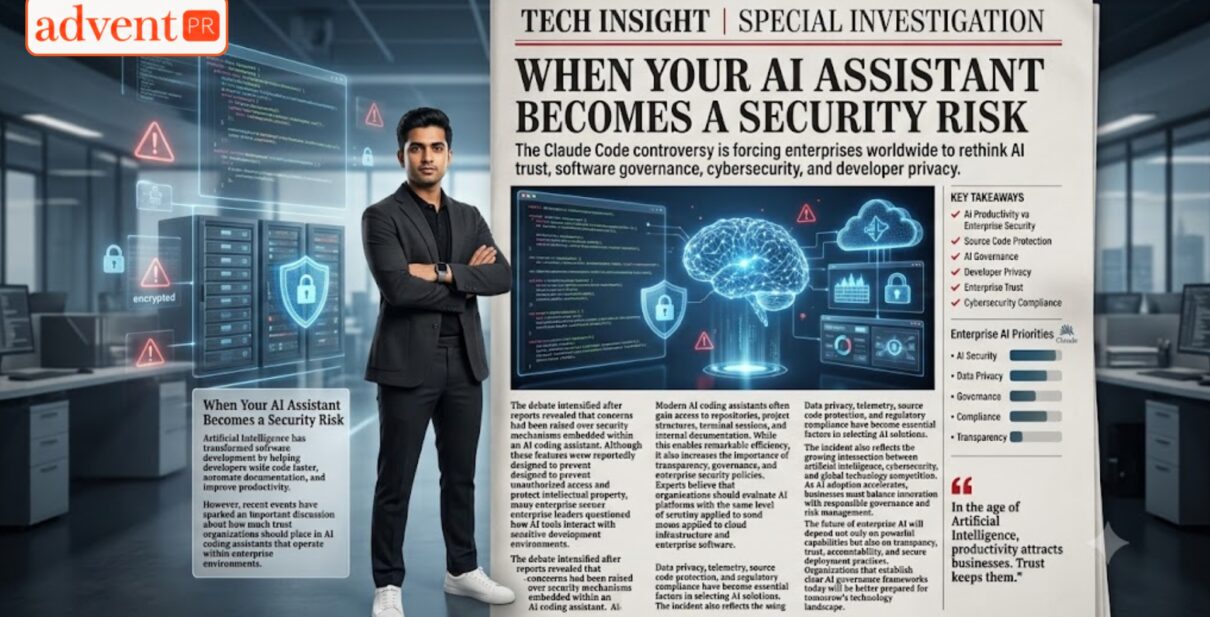
The Claude Code Controversy Every Business Should Understand.
Artificial intelligence has become an indispensable part of modern software development. From generating code to automating debugging and documentation, AI coding assistants are transforming how engineering teams build products. However, as organizations increasingly rely on these tools, a critical question emerges: How much trust should businesses place in AI software that operates within their development environments? The recent controversy surrounding Claude Code has brought this debate into the global spotlight, reminding enterprises that convenience should never outweigh security.
The discussion intensified after reports emerged that a major technology company instructed its employees to discontinue the use of Claude Code, citing concerns over potential security risks. According to the reports, internal investigations raised questions about embedded mechanisms designed to identify specific usage environments and detect unauthorized access. While these features were reportedly introduced as protective measures against misuse and model distillation, the incident sparked widespread debate about transparency, enterprise trust, and the responsibilities of AI vendors.
For businesses, the issue extends far beyond a single coding assistant. Modern AI development tools often require extensive access to source code, repositories, project structures, terminal sessions, and development workflows. This level of access enables impressive productivity gains, but it also introduces new security considerations. Organizations must now evaluate AI tools with the same rigor they apply to cloud platforms, endpoint software, and enterprise applications.
The controversy also highlights a growing trend in the global AI ecosystem: technology is increasingly influenced by geopolitics. Governments are implementing stricter regulations, companies are investing heavily in proprietary AI models, and concerns about intellectual property protection continue to shape product design. Security features intended to prevent unauthorized use may be interpreted differently across jurisdictions, creating challenges for multinational organizations operating in diverse regulatory environments.
Enterprise leaders should view this incident as a valuable lesson rather than a reason to avoid AI adoption altogether. Artificial intelligence remains one of the most powerful productivity enablers available today. However, successful implementation requires a governance-first approach. Businesses should establish clear policies defining which AI tools are approved, what types of data employees can share, how vendor security practices are evaluated, and how AI-generated outputs are monitored for compliance and confidentiality.
Software vendors, meanwhile, face increasing expectations around transparency. Organizations want to understand what data is collected, how telemetry functions, where information is processed, and what safeguards exist to protect customer intellectual property. Clear documentation and proactive communication can significantly strengthen enterprise confidence and reduce misunderstandings that may arise from legitimate security mechanisms.
Ultimately, the Claude Code controversy serves as a reminder that the future of AI will be shaped not only by innovation but also by trust. The most successful AI platforms will be those that balance cutting-edge capabilities with robust security, transparent governance, and enterprise accountability. As AI becomes deeply embedded in business operations, organizations must recognize that selecting an AI tool is no longer just a technology decision—it is a strategic business and cybersecurity decision that can influence operational resilience, customer confidence, and long-term competitive advantage.