



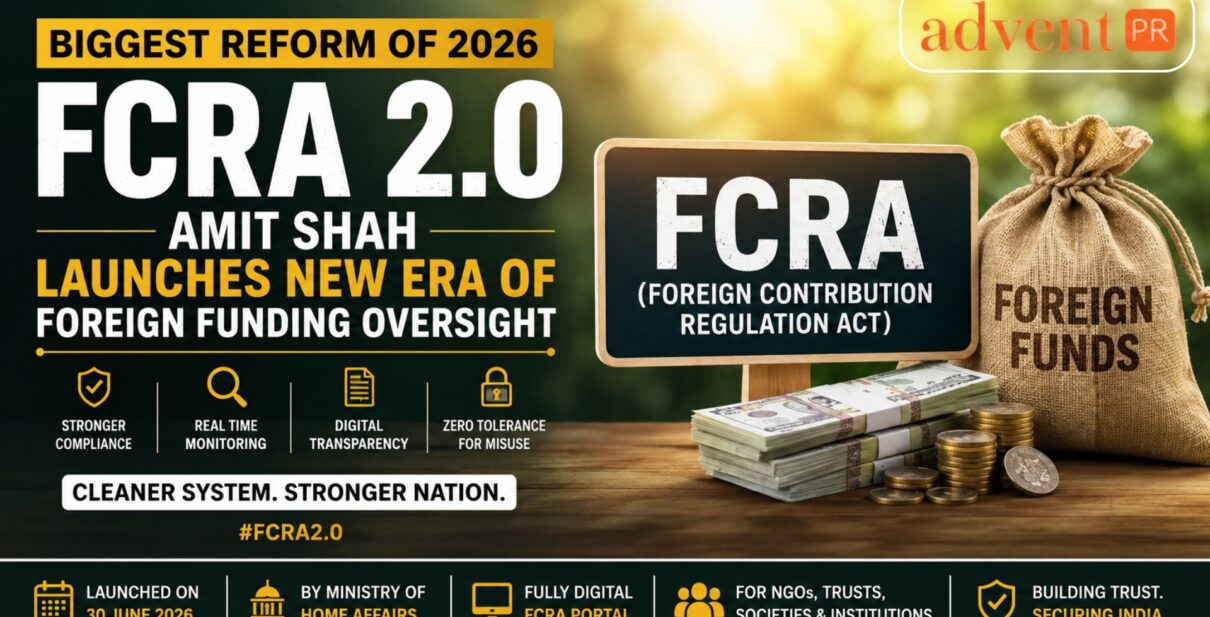
The Government of India has taken a significant step toward modernizing the regulation of foreign contributions with the launch of FCRA 2.0 on 30 June 2026. Unveiled by Union Home Minister Amit Shah, the upgraded digital platform is designed to enhance transparency, strengthen compliance, and streamline the administration of foreign funding received by eligible organizations nationwide.
The launch of FCRA 2.0 marks more than just a technological upgrade. It reflects India’s continued emphasis on digital governance, accountability, and real-time monitoring of foreign contributions under the Foreign Contribution (Regulation) Act, 2010 (FCRA). For NGOs, charitable trusts, educational institutions, and other registered entities, the new platform introduces a more streamlined and transparent compliance process while increasing scrutiny of suspicious financial activities.
What is FCRA 2.0?
The Foreign Contribution Regulation Act governs how organizations in India receive and utilize funds from foreign sources. The legislation is intended to ensure that foreign contributions are used for legitimate purposes without compromising national interests or public accountability.
With the introduction of FCRA 2.0, the Ministry of Home Affairs has digitized nearly every stage of the compliance lifecycle. Registration, renewal, annual return filing, document verification, and communication with authorities can now be managed through a single integrated digital portal.
This initiative aims to reduce administrative delays while making compliance easier for organizations that follow regulatory norms.
Why FCRA 2.0 Matters
Foreign funding has long played an important role in supporting education, healthcare, social welfare, environmental protection, research, and humanitarian initiatives across India. However, ensuring transparency in the movement and utilization of these funds has become increasingly important in today’s digital economy.
FCRA 2.0 addresses this need by introducing advanced verification mechanisms and better integration with government databases. The platform enables authorities to monitor transactions more efficiently while reducing opportunities for misuse, fraudulent reporting, or unauthorized receipt of foreign contributions.
Instead of relying on lengthy paperwork and manual processing, organizations can now complete compliance requirements through a secure digital ecosystem.
Key Features of FCRA 2.0
The newly launched portal introduces several improvements that benefit both regulators and compliant organizations.
- End-to-end online registration process
- Faster renewal of FCRA licenses
- Digital annual return filing
- Secure document verification
- Real-time application tracking
- Improved transparency in foreign contribution reporting
- Better integration with government databases
- Reduced paperwork and manual processing
- Enhanced monitoring of foreign funding transactions
These features are expected to significantly reduce processing time while improving overall regulatory efficiency.
Stronger Oversight Without Hindering Genuine Organizations
One of the primary objectives of FCRA 2.0 is to distinguish between legitimate foreign contributions and suspicious financial activities.
Organizations maintaining accurate records and complying with FCRA regulations are expected to benefit from faster approvals and improved digital services. At the same time, authorities will have greater capability to identify irregular transactions, delayed filings, and potential misuse of foreign funds through technology driven monitoring systems.
This balanced approach allows genuine nonprofit organizations to continue their developmental work while strengthening safeguards against financial misconduct.
What This Means for NGOs and Institutions
Every organization receiving foreign contributions should review its compliance framework in light of the new digital platform.
Maintaining updated documentation, timely filing of annual returns, transparent accounting practices, and accurate reporting will become even more important under the enhanced monitoring environment.
Institutions that adopt digital compliance processes early are likely to experience smoother interactions with regulatory authorities while minimizing the risk of administrative delays.
AdventPR Perspective
At AdventPR, we believe the launch of FCRA 2.0 is not just a compliance update but a defining moment for institutional credibility. In today’s information-driven environment, transparency is a key element of reputation. Organizations that proactively embrace regulatory compliance, communicate their governance standards, and maintain public trust are better positioned to build lasting relationships with stakeholders, donors, policymakers, and the media. Strong compliance backed by clear communication is no longer optional. It is an essential component of effective public relations and sustainable brand reputation.